No Brakes, No Limits: How Adaptive Racing Is Rewriting the Rules of What's Possible

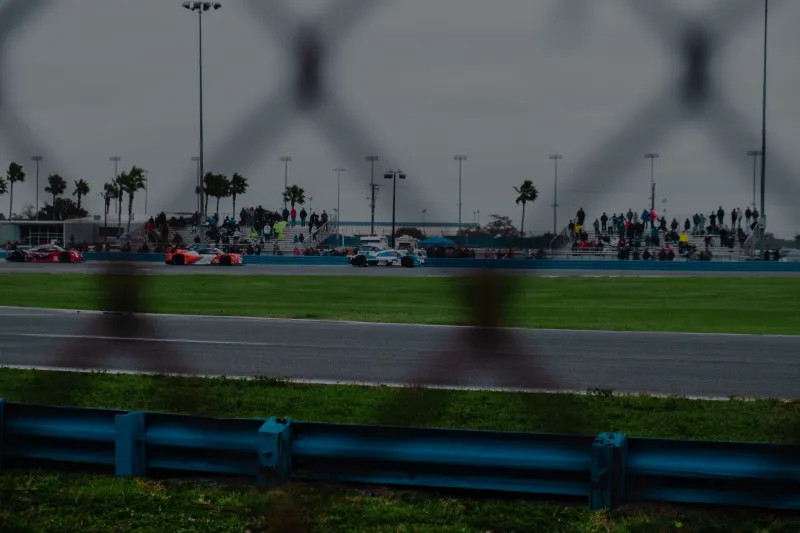
Photo: Mina Noei, CC BY 4.0, via Wikimedia Commons
Adaptive racing isn't a workaround or a consolation prize — it's one of the most technically sophisticated, athletically demanding corners of motorsports in America. And the drivers competing in it are done being treated like an afterthought. From hand-controlled sports cars to purpose-built wheelchair-accessible cockpits, a revolution is underway on the track — and it's changing far more than just who gets to race.
The Myth That Needs to Die
Let's get one thing out of the way early: adaptive racing is not slow. It is not easy. And it is not, in any meaningful sense, a lesser version of the sport.
When Michael Scherer, a 31-year-old driver from Portland, Oregon, who lost the use of his legs in a construction accident at 24, posts lap times at his regional SCCA events, he's not competing in a separate class because he has to be protected from the regular field. He's competing in a modified class because the rules haven't caught up with what he's capable of.
"I've been faster than half the able-bodied field at almost every event I've entered," Scherer says flatly. "The limiting factor isn't my disability. The limiting factor is that the technical regulations for adaptive vehicles are still being written in real time."
That tension — between extraordinary athletic capability and institutional infrastructure that's still catching up — defines the current moment in adaptive motorsports.
What the Technology Actually Looks Like
Hand control systems for racing applications have evolved dramatically over the past decade. Early adaptations were often improvised — aftermarket modifications that worked but weren't optimized for the demands of competitive driving. Today, a new generation of purpose-engineered systems is changing what's possible.
Companies like Sure Grip International and Veigel have developed hand control setups that allow drivers to manage acceleration, braking, and clutch functions through a single lever or push-pull mechanism mounted near the steering wheel. For high-performance applications, these systems are now being integrated directly into factory vehicle electronics, allowing for faster response times and more precise modulation.
For drivers with upper-limb differences or limited hand function, steering solutions have expanded as well. Joystick-controlled steering systems, originally developed for military and industrial applications, are now being adapted for track use. Chin- and head-controlled interfaces, while still largely experimental in racing contexts, are being actively developed by several university engineering programs.
"The technology is genuinely exciting right now," says Dr. Priya Anand, an assistive technology researcher at Georgia Tech who consults with adaptive racing programs. "We're at an inflection point where the engineering is starting to move faster than the regulatory frameworks."
The Drivers Pushing the Envelope
If you want to understand where adaptive racing is headed, look at the people who are already living in the future.
Tamara Weeks, a 27-year-old driver from Phoenix, was born with spinal muscular atrophy. She began racing in a hand-controlled modified street car at 19, drawn in by a local adaptive motorsports club she found almost by accident while searching for accessible recreational activities. Five years later, she's competing nationally in time attack events and recently became the first adaptive driver to complete a full weekend at a NASA high-performance driver education event in her region.
"People expect me to be inspirational," Weeks says with a wry smile. "And I get it — I am kind of inspiring. But mostly I just love going fast. That's the whole story."
Her candor is characteristic of a generation of adaptive athletes who are increasingly resistant to the "inspiration porn" framing that has historically followed disabled competitors in any sport. They want to be covered for their performance, their strategy, their setup choices — not their ability to overcome adversity.
Alex Pham, a 35-year-old deaf driver from San Jose who competes in regional road racing events, puts it directly: "I'm not racing to make anyone feel good about themselves. I'm racing because I'm good at it and I want to win."
Forcing the Industry's Hand
One of the less obvious effects of adaptive racing's growth is the pressure it's putting on the broader industry to rethink its assumptions about vehicle design and safety standards.
When adaptive drivers began pushing for inclusion in sanctioned events, sanctioning bodies had to grapple with questions they'd never seriously considered. What does a driver extraction protocol look like for a competitor who uses a wheelchair? How do you design a safety harness system that works with a hand control setup? What are the fire suppression requirements for a vehicle with modified pedal systems?
Answering those questions required real engineering work — and the solutions that emerged have, in several cases, improved safety standards for all competitors.
"Adaptive racing has been a forcing function for innovation," says Terry Marchetti, a technical official with a regional SCCA chapter who has worked extensively on adaptive vehicle certification. "When you have to solve a problem you've never thought about before, you often end up solving problems you didn't know you had."
The same dynamic is playing out in vehicle design. Automakers who have worked with adaptive racing programs to develop competitive hand control systems have found applications for that technology in consumer vehicles. The feedback loop between motorsports and the broader automotive industry — long a driver of innovation — is now running in a direction the industry didn't anticipate.
The Community Building Around the Competition
Beyond the technology and the lap times, something else is happening in adaptive motorsports that deserves attention: community.
Clubs like Disabled Motorsports America and regional adaptive karting programs are creating spaces where drivers with disabilities can develop skills, share technical knowledge, and support each other through the often-frustrating process of navigating a sport that wasn't built with them in mind. These communities have become crucial support networks — places where a first-time adaptive driver can find someone who's already solved the problem they're facing.
For Tamara Weeks, that community was the difference between staying in the sport and walking away.
"When I started, I felt like I was constantly having to prove I belonged there," she says. "Finding other adaptive drivers who'd been through the same thing — that changed everything. Suddenly I wasn't alone in it."
What Comes Next
The trajectory of adaptive racing in America points in one direction: toward greater integration, greater visibility, and greater competitive legitimacy. The drivers are already there. The technology is catching up. The institutions are, slowly, following.
What's needed now is the cultural shift — the moment when the motorsports community stops treating adaptive racing as a separate thing and starts recognizing it as a full and equal part of the sport.
Michael Scherer, for his part, isn't waiting for permission.
"I'm going to keep showing up and keep posting fast times," he says. "Eventually, the sport is going to have to figure out what to do with me. I'm fine with that."
So are we.