Small Towns, Big Engines: The Rural Racing Revolution Nobody Saw Coming
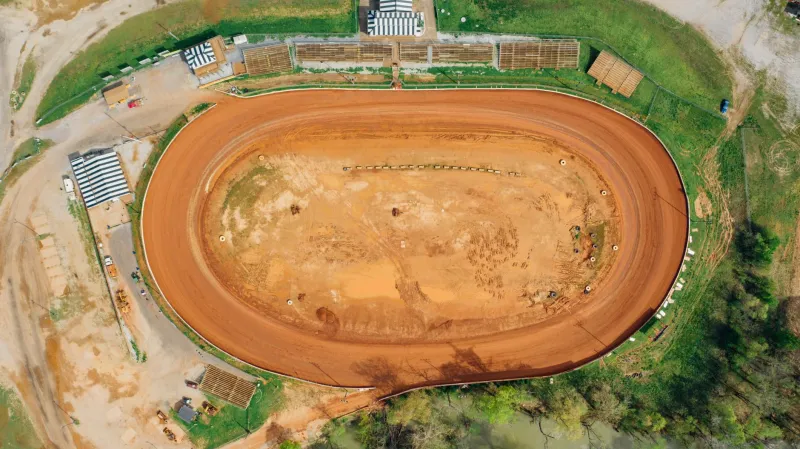
There's a Friday night in late August at a small-town track in central Kansas where the bleachers are packed, the smell of burnt rubber hangs sweet in the air, and a 19-year-old from a cattle-farming family is about to put down the fastest qualifying lap of her life. No talent scout flew in from Charlotte. No corporate hospitality tent is blocking the view. Just community, competition, and the kind of raw motorsports energy that the sport's establishment keeps saying doesn't exist outside of major metro areas.
They've been wrong for a long time.
The Myth of the Urban Advantage
For decades, the dominant narrative in American motorsports has placed talent development squarely in the hands of well-funded programs clustered near major cities — think the karting circuits outside of Indianapolis, the road courses near Los Angeles, or the sprawling complexes serving the NASCAR pipeline in the Carolinas. If you didn't have proximity to those ecosystems, conventional wisdom said you were starting from behind.
But something has been quietly building in the spaces between those hubs. Rural racing communities — anchored by county fairground ovals, repurposed agricultural land, and decades-old family tracks — have been developing drivers, mechanics, and race organizers with a resourcefulness that urban programs, flush with cash and facilities, rarely need to develop. And that resourcefulness? It turns out to be one of the most valuable things in motorsports.
"Out here, if your car breaks down on Saturday morning, you're not calling a parts supplier who can deliver by afternoon," says Travis Holliday, who runs a weekly modified series out of a 3/8-mile clay oval in rural Nebraska. "You're figuring it out with what's in the shop. That teaches a kind of mechanical intuition that you genuinely can't buy."
Dirt, Ingenuity, and Community Infrastructure
What makes rural racing communities tick isn't just necessity — it's a deeply ingrained culture of collective problem-solving. Across the Great Plains, the rural South, and the agricultural stretches of the Pacific Northwest, local tracks have survived economic downturns, pandemic closures, and the slow creep of entertainment alternatives by leaning into what they've always been: community anchors.
Take the story of the Ridgeline Racing Collective in western Montana, a loose coalition of small-track operators, local fabricators, and volunteer race officials who banded together in 2021 to share resources, coordinate schedules, and jointly develop a junior racing program. What started as a practical solution to dwindling budgets has evolved into something genuinely innovative — a regional development ladder that has already sent three young drivers into national amateur competition.
"We couldn't compete with what bigger programs offer individually," says collective co-founder Maria Reinholt. "But together, we could offer something they couldn't: a real community that wraps around a young racer from their first kart session to their first feature win."
This kind of lateral thinking is showing up everywhere. In rural Mississippi, a former cotton farmer converted unused acreage into an autocross and time trial facility that now draws participants from four states. In upstate New York, a volunteer-run road rally series has become an unlikely incubator for navigation and car-control skills. None of these operations have venture capital backing. Most run on entry fees, local sponsorships from farm equipment dealers and feed stores, and an enormous amount of donated labor.
The Talent Pipeline Nobody Is Talking About
Here's what the professional motorsports world is slowly waking up to: rural tracks are producing talent at a remarkable rate, and that talent often arrives at higher levels of competition with something their more privileged counterparts sometimes lack — grit, adaptability, and a comfort with high-pressure improvisation.
Scout programs affiliated with NASCAR's grassroots initiatives and IMSA's regional development efforts have increasingly flagged rural circuits as underserved recruiting grounds. Several current national-level competitors trace their roots to small-town tracks where they were racing for trophies and gas money, not scholarship points.
"The kids coming out of these rural programs have usually been doing their own setup work since they were 14," says one talent evaluator who works with a national stock car series. "They understand the car differently. That's not something you can teach in a simulator session."
For communities of color in rural areas — Black farming communities in the Deep South, Indigenous communities in the Southwest and Northern Plains, Latino agricultural workers throughout the Central Valley — the barriers to participation have historically been higher, layered with both economic and cultural exclusion. But several grassroots organizations are working specifically to change that, creating entry points within rural racing culture that actively welcome and support drivers from backgrounds the sport has long overlooked.
Building Something That Lasts
The rural racing revolution isn't just about who's winning races. It's about who gets to be part of the sport at all. When a small-town track becomes a genuine community institution — when it's the place where a first-generation racing family finds their footing, where a young woman from a farming background discovers she can drive a modified faster than anyone in the county, where neighbors build cars together in a shared shop space — it becomes something motorsports desperately needs more of.
It becomes a reason to belong.
The challenges are real. Rural tracks face aging infrastructure, volunteer fatigue, and the constant financial pressure of operating on thin margins. Broadband limitations can make it harder to connect with national organizations or access digital training resources. Geographic isolation means longer travel to competition, a real cost for families already stretched thin.
But the communities building these programs aren't waiting for those problems to be solved before they get to work. They're doing what rural America has always done: making something from what's available, sharing what they have, and betting on the people in front of them.
One track at a time, they're proving that the future of American motorsports doesn't only live in the places with the biggest budgets. Sometimes it lives at the end of a gravel road, under a set of floodlights, where the flagman has been doing this for 30 years and the crowd knows every driver by name.
That's not a consolation prize. That's the real thing.