The Grandstand Knows Everybody: A Night at America's Beloved Short Track
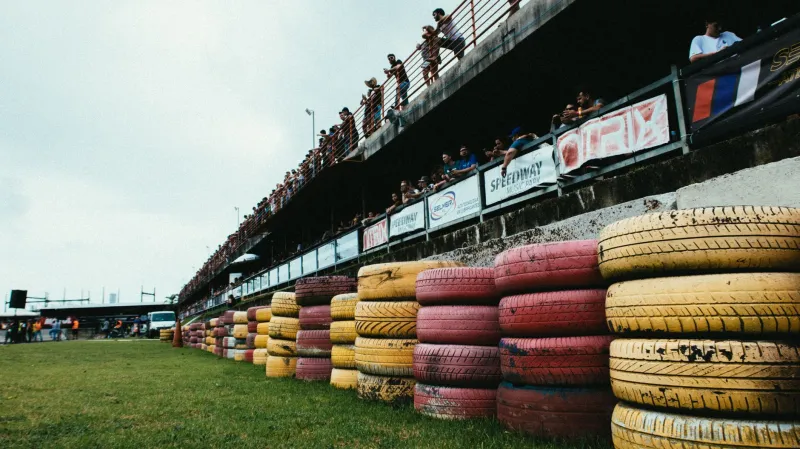
The smell hits you before the sound. Fried dough and race fuel, mingling in the humid evening air. Then the sound itself: a four-cylinder engine barking to life somewhere behind the pit gate, and a slow tide of people climbing the bleachers with lawn chairs and Styrofoam cups.
It's Saturday at Highbanks Motor Speedway—population on a race night: somewhere around 2,000, which is roughly triple what the surrounding township claims on the census.
The Roster Is the Story
Short tracks don't make headlines the way the big circuits do, but they're where American motorsports actually lives. There are hundreds of them scattered across the country, and on any given weekend, they stage the most diverse gathering in their county.
Consider Highbanks' current lineup. In the late-model division, crew chief Ray Delgado, a retired auto mechanic and the son of Mexican immigrants, has been turning wrenches at this track for 31 years. He now mentors three younger crews, including one led by Amara Osei, a 24-year-old engineering student who took over her late father's street stock team.
In the stands: Earl and Jeanette Hobbs, both in their seventies, who haven't missed a Saturday since 1987. Two rows down, the Nguyen family, at their first-ever race after their son's school assigned a community-event report. And leaning on the fence by turn four, a cluster of teenagers who saved up all summer to split the cost of a hobby-class beater they collectively named "The Comma"—because, as one of them explains, "she pauses before she goes."
Nobody's a Stranger at the Fence
Here's the thing about short-track culture that outsiders miss: the barrier between fan and participant is tissue-thin. Grandstands spill into the pits after the feature. Kids collect driver trading cards and get them signed by people they'll see at the grocery store tomorrow morning.
"I've worked at every level of this sport," Delgado says, wiping grease off his hands. "The big places, you're a credential. Out here, you're a neighbor with a helmet on."
That proximity does something no marketing campaign can. When your kid's favorite driver is the woman who coaches her soccer team, racing stops being a spectacle and becomes a possibility.
The Routine Is the Point
Sociologists have a term for institutions like this—"third places," the gathering spots that aren't home or work and where community gets built through sheer repetition. Short tracks are third places with horsepower.
Show up enough Saturdays and you'll watch the same rituals repeat: the national anthem with hands over hearts and over phone screens; the kid on a bicycle weaving through the pit area like he owns it (he kind of does); the inevitable first-caution scramble for popcorn.
Unity isn't announced here. It accrues. Week by week, season by season, until a grandstand full of strangers becomes a grandstand full of names.
Keeping the Lights On
None of this is guaranteed. Land values creep up. Insurance premiums balloon. A track that survived fifty years can vanish in one bad winter. That's why the healthiest short tracks are the ones whose communities treat them as infrastructure—as essential as the library or the volunteer fire department.
Highbanks survives because its people show up, buy the concessions, volunteer for work weekends, and bring one more family each season.
The Hobbses put it best as the late models rolled onto the front stretch, engines screaming under the lights. "People ask why we keep coming," Jeanette shouted over the noise. Earl finished the thought: "Where else would we be? This is everybody. This is the whole town, going fast."
One track. Every voice. Full speed ahead.